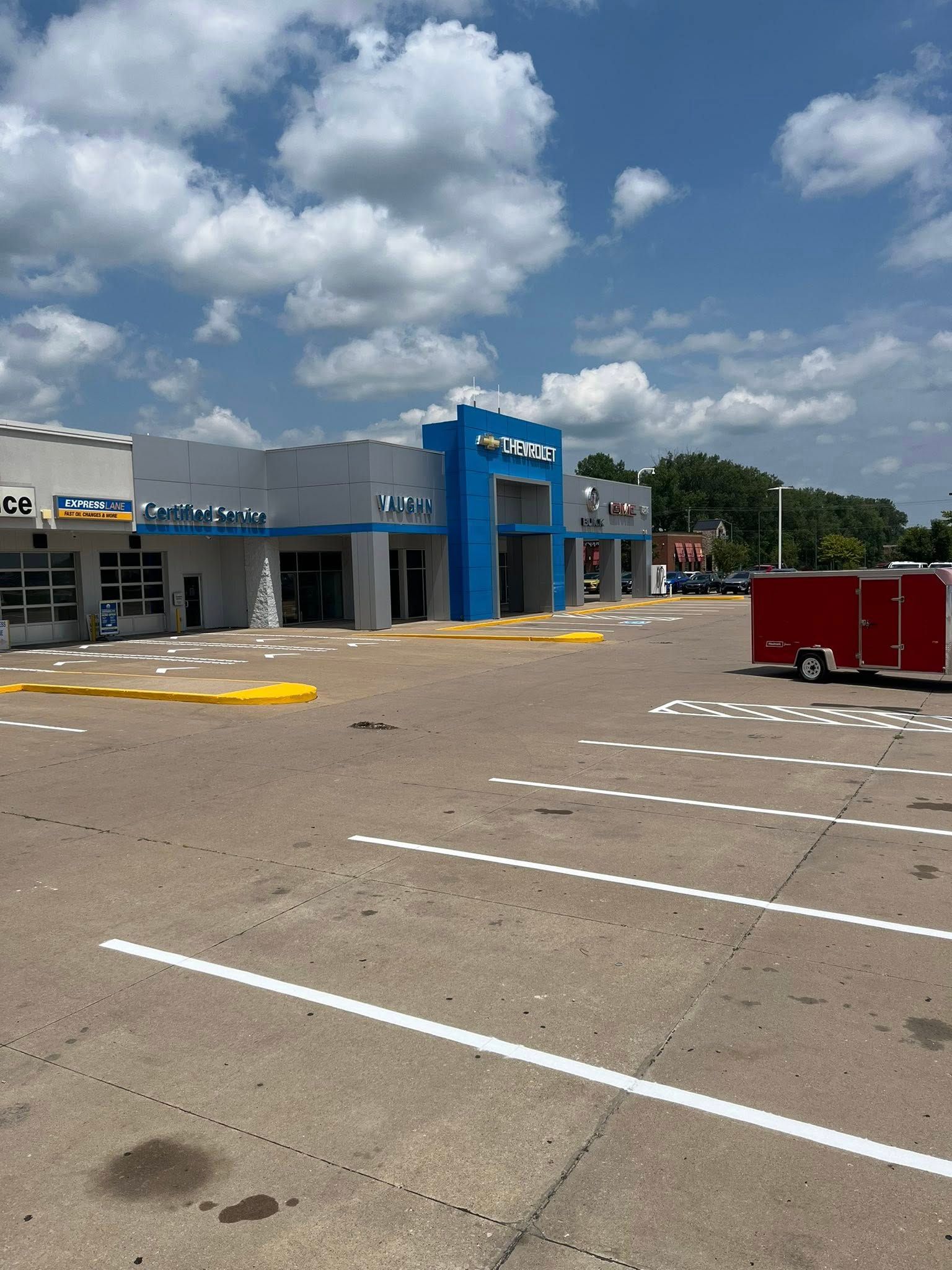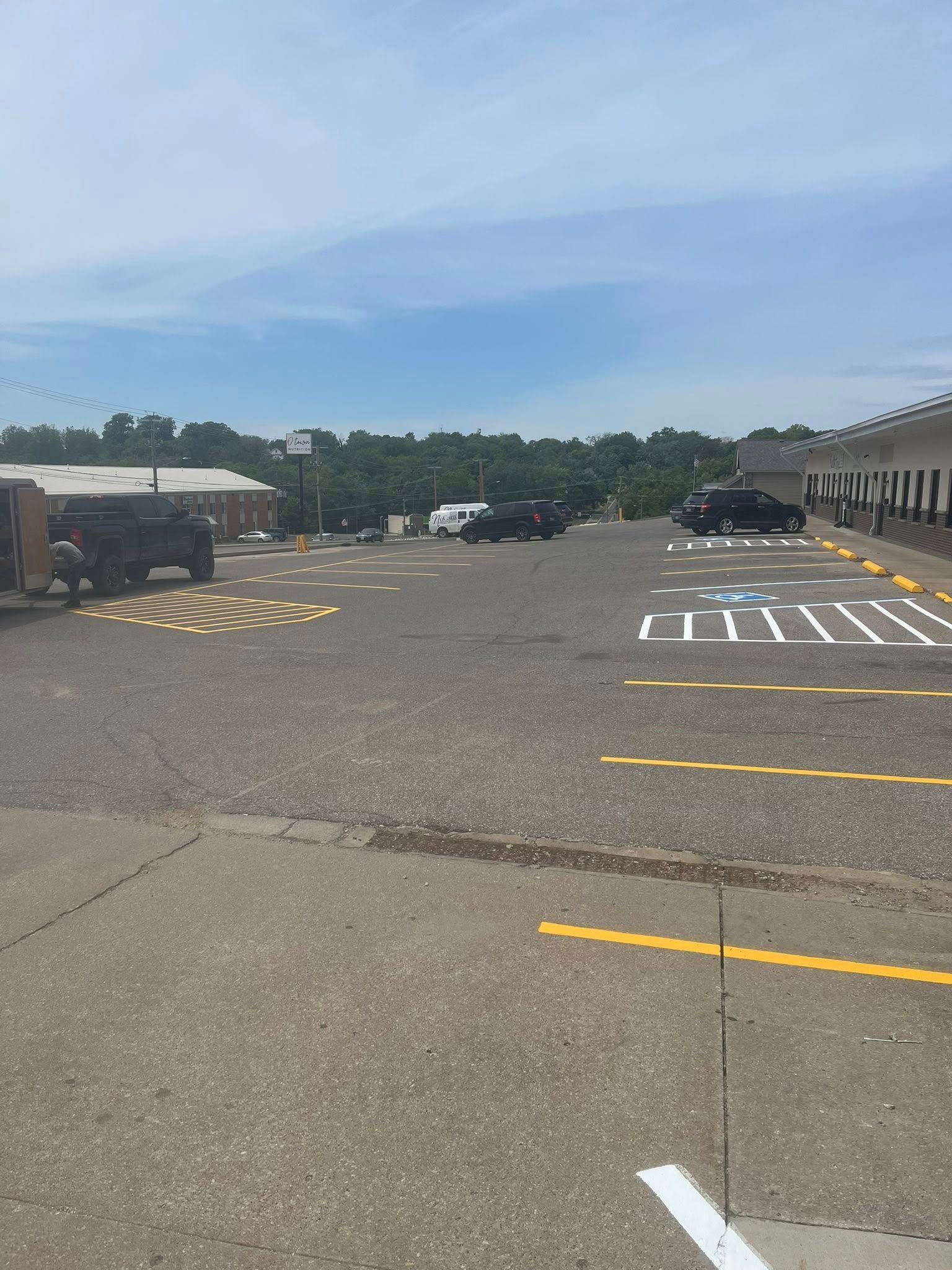
How Often Do Commercial Parking Lots in the Midwest Need Restriping?
Commercial parking lots serve as more than just places for vehicles to park. They play a critical role in traffic organization, pedestrian safety, accessibility compliance, and the overall appearance of a property. Across the Midwest, parking lot striping faces unique challenges due to changing seasons, snow removal operations, freeze-thaw cycles, heavy traffic, and exposure to harsh weather conditions. As pavement markings fade over time, parking spaces become less visible, directional arrows lose clarity, and safety markings become difficult to follow. This deterioration can create confusion for drivers, increase liability risks, and negatively impact the customer experience. For property owners and facility managers, maintaining visible pavement markings is an essential part of protecting both people and property.
Understanding how often commercial parking lots need restriping is an important aspect of long-term property maintenance. While there is no universal schedule that applies to every lot, several factors influence the lifespan of pavement markings, including traffic volume, environmental conditions, paint quality, and maintenance practices. Businesses throughout the Midwest often face more demanding conditions than properties in milder climates, making regular evaluations especially important. By understanding the factors that affect striping durability and implementing a proactive maintenance strategy, property owners can maintain safer, more attractive, and more efficient parking facilities while protecting their investment.
Why Midwest Weather Impacts Restriping Frequency
Seasonal Conditions Accelerate Wear
The Midwest experiences a wide range of weather conditions throughout the year. Snow, ice, rain, intense sunlight, and fluctuating temperatures all contribute to the gradual deterioration of pavement markings. Unlike regions with relatively stable climates, Midwest parking lots endure repeated freeze-thaw cycles that can stress pavement surfaces and weaken striping materials.
When moisture penetrates pavement and freezes, expansion occurs beneath the surface. As temperatures rise, the ice melts and contracts. This ongoing process contributes to pavement movement that can affect the durability of painted lines and markings. Over time, striping may crack, fade, or become less defined.
Snow Removal Creates Additional Challenges
Snow removal equipment is one of the leading causes of striping wear in the Midwest. Plow blades frequently come into contact with pavement surfaces, scraping paint and reducing visibility. Parking lots that require frequent snow removal often experience faster deterioration than lots in regions with minimal snowfall.
Commercial properties such as shopping centers, office complexes, healthcare facilities, and industrial sites often undergo repeated snow-clearing operations throughout winter. Each pass of snow removal equipment can gradually remove portions of pavement markings, shortening the lifespan of striping.
UV Exposure and Moisture Damage
While winter conditions receive significant attention, summer weather also affects pavement markings. Ultraviolet exposure causes paint pigments to fade over time, while rain and standing water contribute to gradual wear. The combination of seasonal extremes makes routine parking lot evaluations particularly important for Midwest property owners.
Recommended Restriping Timelines for Commercial Properties
General Industry Guidelines
Most commercial parking lots benefit from restriping every 18 to 36 months. However, this timeframe varies depending on traffic levels, environmental exposure, and maintenance practices. High-traffic facilities may require more frequent attention, while lower-traffic properties can sometimes extend maintenance intervals.
Regular inspections provide a more reliable approach than relying solely on a calendar schedule. Property managers should evaluate striping visibility annually and schedule restriping when markings become difficult to see from a reasonable distance.
High-Traffic Commercial Properties
Retail centers, grocery stores, restaurants, hospitals, and entertainment venues often experience heavy daily traffic. Constant vehicle movement accelerates wear on parking stall lines, directional arrows, fire lanes, and pedestrian crossings.
For these properties, restriping may be necessary every one to two years. Frequent inspections help identify areas where markings have deteriorated before safety concerns arise. Maintaining clear striping helps visitors navigate the property while reducing confusion during peak traffic periods.
Moderate-Traffic Properties
Office buildings, professional complexes, educational facilities, and mixed-use developments typically experience moderate traffic volumes. These locations often require restriping every two to three years, depending on pavement conditions and weather exposure.
A preventive maintenance approach allows property owners to address fading markings before they become difficult to recognize. This strategy supports safety while helping preserve a professional appearance.
Low-Traffic Facilities
Warehouses, storage facilities, and certain industrial properties may experience less frequent traffic. In these cases, striping can sometimes remain serviceable for three years or longer. Nevertheless, annual inspections remain important because environmental factors can still affect visibility.
Signs Your Parking Lot Needs Restriping Sooner
Fading Parking Stall Lines
One of the most obvious indicators is reduced line visibility. Drivers should be able to identify parking spaces clearly from a distance. When lines appear faded, broken, or difficult to distinguish from the surrounding pavement, restriping should be considered.
Poorly defined parking spaces can lead to inefficient parking patterns, reduced capacity, and increased vehicle conflicts.
Difficult-to-See Directional Markings
Directional arrows, stop bars, and traffic flow indicators play a critical role in parking lot safety. When these markings fade, drivers may become uncertain about traffic patterns, increasing the risk of accidents.
Maintaining highly visible directional markings helps improve traffic circulation and supports safer vehicle movement throughout the property.
ADA Compliance Concerns
Accessible parking spaces, access aisles, and related pavement markings must remain clearly visible. Faded accessibility markings can create compliance concerns and expose property owners to unnecessary risk.
Regular restriping helps maintain accessibility standards while supporting equal access for all visitors. Property managers should pay close attention to these areas during routine inspections.
Customer Complaints and Appearance Issues
Visitors often notice parking lot conditions before entering a building. Faded striping can create an impression of neglect, even when the property itself is well maintained.
When customers begin mentioning parking difficulties or visual concerns, it may indicate that restriping is needed sooner than originally planned.
Factors That Influence Striping Longevity
Quality of Striping Materials
Not all striping materials provide the same lifespan. Higher-quality traffic paints and specialized coatings typically offer greater durability than lower-cost alternatives. Material selection should consider expected traffic levels, climate conditions, and maintenance goals.
Investing in durable products often reduces long-term maintenance costs by extending the time between restriping projects.
Traffic Volume and Vehicle Types
Traffic intensity significantly affects striping performance. Parking lots that accommodate delivery vehicles, commercial fleets, and heavy equipment often experience faster paint wear than lots serving passenger vehicles.
The weight and frequency of vehicle movement directly influence how quickly markings deteriorate.
Pavement Condition
The condition of the pavement itself affects striping durability. Cracked, deteriorated, or uneven surfaces can shorten the lifespan of paint applications. Surface preparation plays an important role in achieving strong paint adhesion.
Properties that maintain pavement through crack sealing, sealcoating, and repairs often achieve better striping performance.
Maintenance Practices
Routine maintenance contributes to longer-lasting striping. Prompt snow removal, proper cleaning, drainage management, and timely pavement repairs all support the longevity of pavement markings.
A comprehensive parking lot maintenance strategy helps maximize the value of restriping investments.
Best Practices for Maintaining Visible Parking Lot Markings
Conduct Annual Inspections
Annual parking lot evaluations provide an opportunity to identify fading markings before safety concerns develop. Property managers should assess parking stalls, directional arrows, fire lanes, loading zones, pedestrian crossings, and accessibility markings.
Photographic documentation can help track changes over time and support maintenance planning.
Coordinate Restriping with Sealcoating
Many commercial properties schedule restriping after sealcoating projects. Fresh pavement surfaces provide an excellent foundation for new markings and create a clean, professional appearance.
Combining these services often improves efficiency while supporting long-term pavement preservation goals.
Prioritize Safety-Critical Areas
Some markings require more attention than others. Crosswalks, fire lanes, stop bars, loading zones, and ADA parking spaces should receive priority during maintenance planning.
Maintaining visibility in these areas helps support compliance requirements and reduces potential liability concerns.
Develop a Preventive Maintenance Plan
Waiting until striping becomes severely faded often results in avoidable risks. A preventive approach allows property owners to schedule maintenance before visibility becomes a concern.
Establishing inspection schedules, documenting pavement conditions, and budgeting for periodic restriping helps create a more predictable maintenance program. This proactive strategy supports safety, improves appearance, and protects long-term property value.
Professional Expertise Backed by Proven Industry Experience
Commercial parking lot restriping is not a one-size-fits-all maintenance task, particularly in the Midwest where weather conditions place additional stress on pavement markings. While many properties benefit from restriping every 18 to 36 months, actual timelines depend on traffic levels, pavement condition, material quality, snow removal activity, and environmental exposure. Regular inspections provide the most reliable method for determining when maintenance is needed.
Clear pavement markings contribute to safer traffic flow, improved accessibility, stronger curb appeal, and reduced liability concerns. By recognizing early signs of fading and implementing a preventive maintenance strategy, property owners can avoid larger issues while maintaining a professional appearance. Investing in timely restriping protects both the functionality and value of commercial properties, making it an essential component of long-term parking lot management.
For commercial property owners seeking dependable parking lot maintenance solutions, KG Construction
serves as a trusted general contractor in Ottumwa, Iowa. With 7
years of industry experience, we understand the challenges Midwest weather creates for commercial pavement markings and parking lot infrastructure. Our approach focuses on helping businesses maintain safe, organized, and visually appealing properties through quality workmanship and attention to detail. By combining practical industry knowledge with a commitment to dependable service, we help property owners protect valuable assets and maintain professional-looking facilities throughout the year. Whether a property requires routine maintenance planning, parking lot upgrades, or construction-related improvements, we deliver results designed to support business operations and preserve property value across every season.