What to Expect During a Parking Lot Striping Job: Timeline, Downtime, and Results
Parking lot striping is one of the most important maintenance services for commercial properties, yet many property owners are unsure about what happens during the process. Fresh pavement markings do more than improve appearance. They create organized traffic flow, enhance safety, support accessibility compliance, and help visitors navigate a property with confidence. Whether managing a retail center, office complex, industrial facility, healthcare campus, or educational institution, understanding the striping process allows property owners to prepare properly and minimize disruptions. A well-planned striping project can extend the usefulness of a parking lot while improving the overall customer experience from the moment vehicles enter the property.
Many business owners hesitate to schedule parking lot striping because they are concerned about downtime, operational interruptions, and project timelines. In reality, most striping projects can be completed quickly when planned correctly. The duration depends on factors such as parking lot size, pavement condition, weather conditions, and the complexity of the layout. Knowing what to expect before work begins helps eliminate uncertainty and allows businesses to coordinate parking access, customer traffic, and daily operations. Understanding the timeline, potential downtime, and final results provides valuable insight into how professional parking lot striping contributes to a safer, more efficient, and visually appealing property.
Understanding the Planning Phase Before Striping Begins
Site Assessment and Project Evaluation
Every successful parking lot striping project starts with a thorough evaluation of the site. Before paint is applied, contractors assess the condition of the pavement, existing markings, traffic flow patterns, and accessibility requirements.
During this stage, measurements are taken to determine parking space dimensions, lane widths, loading zones, fire lanes, pedestrian crossings, and directional markings. Property-specific needs are reviewed to ensure the final layout supports both safety and operational efficiency.
A detailed assessment helps identify potential challenges before work begins. For example, faded markings may need to be removed, pavement repairs may be required, or layout adjustments may be recommended to maximize available parking capacity.
Scheduling and Coordination
Project scheduling plays a major role in minimizing disruptions. Many commercial striping jobs are scheduled during off-peak hours, weekends, evenings, or holidays to reduce interference with daily operations.
Property managers often coordinate temporary parking arrangements and notify tenants, employees, and visitors about restricted areas. Clear communication before the project begins helps prevent confusion and allows traffic to continue moving smoothly throughout the process.
For large facilities, striping work may be completed in phases. This approach keeps portions of the parking lot operational while work progresses in designated sections.
The Parking Lot Striping Process and Timeline
Surface Preparation
Preparation is one of the most important stages of any striping project. Even the highest-quality paint will not perform well if applied to a dirty or damaged surface.
Before striping begins, contractors remove dirt, debris, dust, leaves, oil residue, and loose materials from the pavement. Pressure washing or mechanical cleaning may be necessary in areas with heavy contamination.
If cracks, potholes, or damaged pavement are present, repairs are often completed before striping starts. A clean and stable surface helps create sharper lines and improves the longevity of the markings.
Layout and Marking
Once the pavement is prepared, technicians begin laying out the design. Measurements are verified carefully to ensure parking spaces, directional arrows, accessible parking areas, and traffic lanes comply with applicable regulations and property requirements.
Temporary chalk lines or layout markings are commonly used to establish precise placement before paint application begins. This step reduces the risk of errors and ensures consistent spacing throughout the parking lot.
Paint Application
After layout approval, the striping process begins. Specialized striping equipment applies paint with precision and uniformity.
The actual application process moves relatively quickly for most properties. Small commercial lots may be completed within a few hours, while larger facilities may require multiple days depending on size and complexity.
Weather conditions can influence the schedule. Rain, excessive humidity, or extreme temperatures may delay work because proper curing requires suitable environmental conditions.
Drying and Curing Time
Although paint application itself may be completed quickly, drying and curing time must be considered.
Most modern traffic paints become dry to the touch within 30 to 60 minutes. However, parking areas typically remain restricted for several hours to prevent tire marks, smudging, or premature wear.
Some high-performance coatings may require additional curing time depending on product specifications and environmental conditions.
Managing Downtime During a Striping Project
What Causes Parking Lot Downtime?
Downtime refers to the period when portions of the parking lot cannot be used due to ongoing work or curing requirements.
Several factors influence downtime, including:
- Parking lot size
- Number of markings required
- Surface preparation needs
- Weather conditions
- Paint type
- Traffic volume
Understanding these variables helps property owners plan operations more accurately.
Strategies to Minimize Disruptions
Professional contractors use several methods to reduce inconvenience during striping projects.
One common strategy involves completing work in phases. Instead of closing the entire parking lot, sections are completed one at a time. This allows customers, employees, and deliveries to continue accessing the property.
Another approach involves scheduling work during periods of low activity. Retail centers may schedule striping overnight, while office properties may choose weekends when employee traffic is reduced.
Clear signage, temporary barriers, and directional guidance also help maintain safety throughout the project.
Real-World Example
Consider a busy shopping center with hundreds of daily visitors. Closing the entire parking lot would significantly affect business operations.
Instead, the property manager coordinates with the contractor to divide the project into multiple sections. One area is striped and cured while another remains open. Once the first section reopens, work shifts to the next area.
This phased approach allows businesses to remain operational while still achieving high-quality striping results.
What Results Should Property Owners Expect?
Improved Safety and Traffic Flow
One of the most immediate benefits of fresh striping is enhanced safety.
Clearly marked lanes guide vehicle movement, reducing confusion and helping drivers navigate the property more easily. Pedestrian crossings become more visible, helping improve awareness among both drivers and pedestrians.
Directional arrows, stop bars, loading zones, and fire lanes contribute to a more organized traffic environment.
Better First Impressions
Parking lots often serve as the first point of contact for customers and visitors. Faded markings can create the impression of neglect, even when the building itself is well maintained.
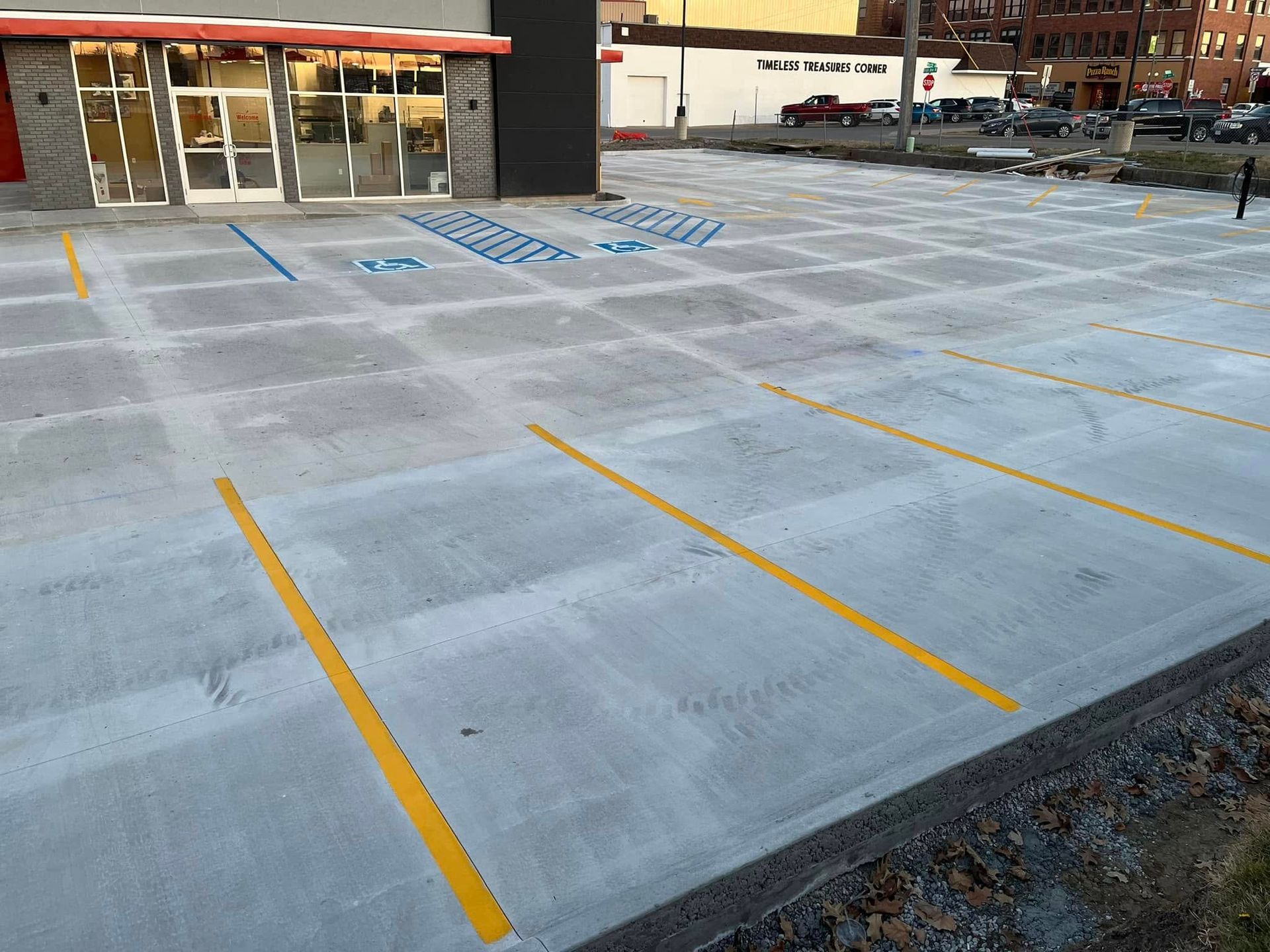
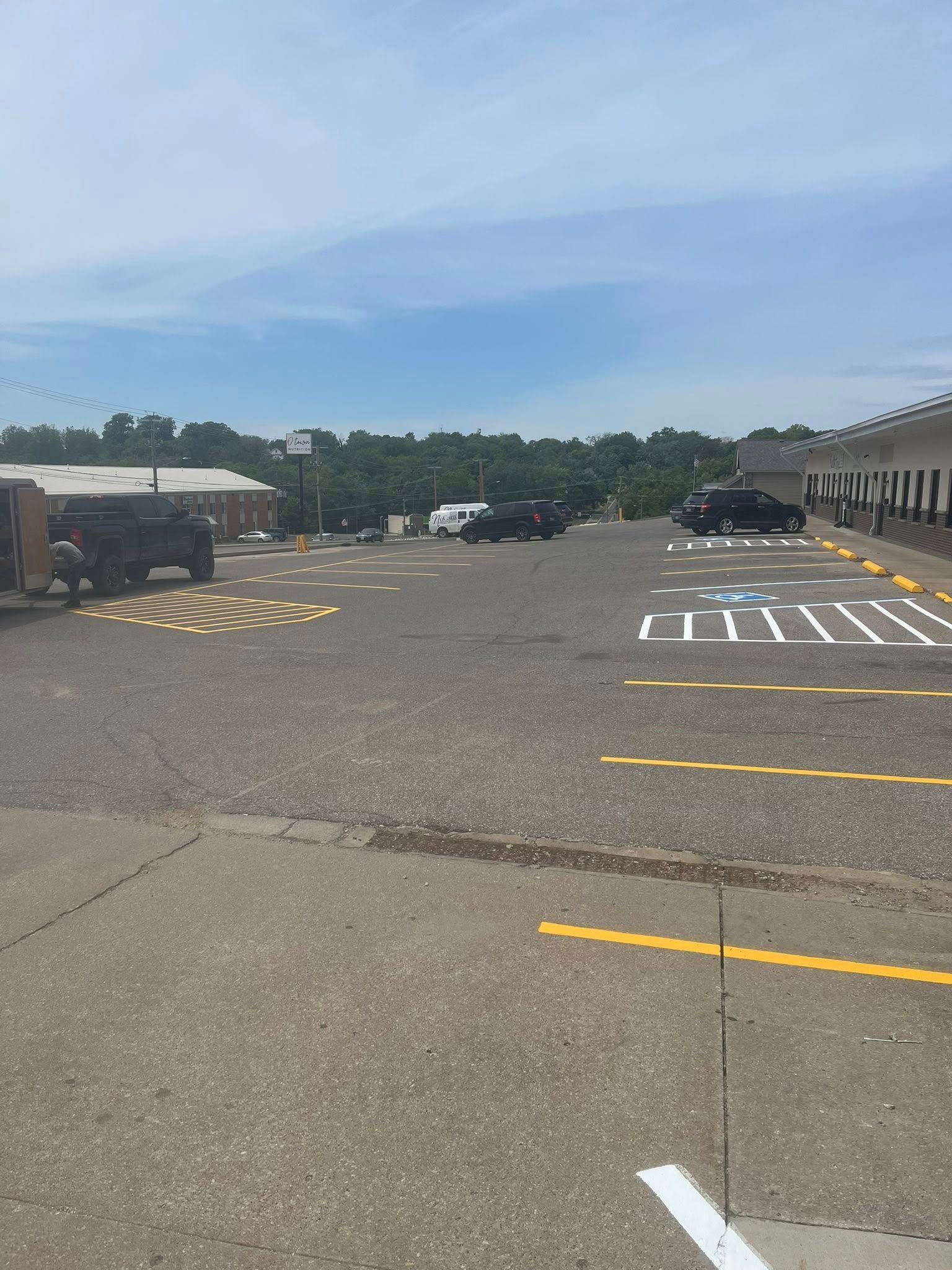
Fresh striping instantly improves curb appeal. Crisp, visible lines create a cleaner and more professional appearance that reflects positively on the property.
For retail centers, office complexes, hotels, and healthcare facilities, appearance plays a significant role in shaping visitor perceptions.
Increased Parking Efficiency
Well-designed striping maximizes available space while maintaining safe traffic patterns.
Property owners are often surprised to discover that layout adjustments can create additional parking capacity without expanding the lot. Proper spacing, optimized traffic flow, and strategic placement of parking stalls help improve overall functionality.
Improved organization also reduces congestion during peak usage periods.
Enhanced Accessibility Compliance
Accessible parking spaces, access aisles, and required pavement markings must meet regulatory standards.
Professional striping helps ensure compliance with accessibility requirements while creating safer and more convenient access for all visitors.
Regular maintenance of these markings demonstrates a commitment to inclusivity and reduces potential liability concerns.
Best Practices for Long-Lasting Striping Results
Choose the Right Timing
Scheduling striping during favorable weather conditions improves paint performance and longevity.
Moderate temperatures and dry conditions provide ideal circumstances for application and curing. Planning projects during suitable weather windows helps maximize the lifespan of the markings.
Maintain the Parking Lot Surface
Pavement condition directly impacts striping durability.
Regular sweeping, crack sealing, sealcoating, and pavement repairs help protect both the asphalt and the markings. Preventive maintenance reduces deterioration and preserves visibility over time.
Conduct Routine Inspections
Parking lot markings gradually fade due to traffic exposure, sunlight, weather, and routine wear.
Periodic inspections help identify areas requiring touch-ups before visibility becomes a concern. Addressing fading early often reduces maintenance costs compared to waiting until a complete restriping is necessary.
Work With Experienced Professionals
Experienced contractors understand layout design, regulatory requirements, traffic management, and proper application techniques.
Professional planning, preparation, and execution contribute significantly to the quality and longevity of the finished project. Property owners benefit from fewer errors, better durability, and improved overall performance.
Dedicated Construction Professionals Delivering Quality Workmanship
Parking lot striping is a relatively straightforward project when property owners understand the process from start to finish. The timeline typically includes site evaluation, surface preparation, layout planning, paint application, and curing. While temporary downtime is unavoidable, proper scheduling and phased work strategies help minimize disruptions and maintain access for customers, employees, and visitors. Fresh pavement markings improve traffic flow, increase safety, enhance accessibility, and create a more professional appearance for any commercial property.
Beyond aesthetics, striping serves as an essential component of parking lot management. Clear markings support organization, reduce confusion, and help properties operate more efficiently. Regular maintenance ensures these benefits continue year after year while protecting the overall value of the property. By understanding what to expect during a striping project, property owners can make informed decisions, prepare appropriately, and achieve results that support both safety and long-term functionality.
When commercial property owners need dependable construction and site improvement services, KG Construction
stands as a trusted resource in Ottumwa, Iowa. As an experienced general contractor with 7
years of industry experience, we understand the importance of maintaining safe, organized, and professional commercial properties. Parking lot striping is one of many improvements that contribute to a property's appearance, functionality, and long-term value. Property owners seeking a reliable construction partner can trust us to provide guidance, expertise, and quality work that reflects the standards expected from a respected industry professional.